Showing posts with label Policy. Show all posts

Friday, January 12, 2024

5 years ago!

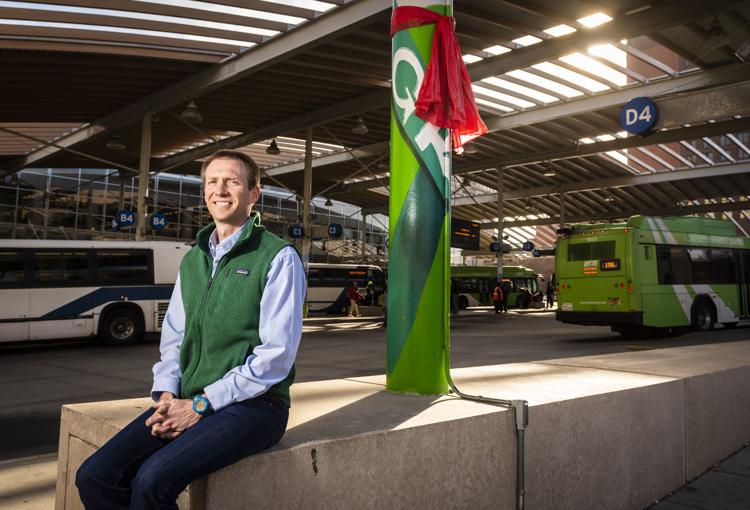
I met Nathan 5 years ago as we were learning to drive.  He and two women are the only 3 bus drivers remaining from our 2019 class of 11 cadets.  Check out our class photo https://www.blindspot.city/2019/02/public-servants.html

The memories of driving came flooding back yesterday while Nathan and I talked about how fast the last 5 years have flown by.  He is enjoying driving and has found a rhythm that is tenable.  He credited WSTA's policy change to max 10 hours of driving per day for helping reduce driver strain. He said before that there were too many accidents and too many drivers getting burn out chasing over time pay.

It was a joy to catch up with him and remember how important public transit is to our community.  I am grateful riding the bus is an option for me. 


Tuesday, December 29, 2020

Progress in Community Health Partnerships: Research, Education, and Action

"Influencing Public Transportation Policy Through Community Engagement and Coalition Building: Process and Preliminary Outcomes" is now available online.  

Please contact me if you would like to access the article but are unable. 

Summers, P., Chao, E., McCoy, P., Perry, J., & Rhodes, S.D. (2020). Influencing Public Transportation Policy Through Community Engagement and Coalition Building: Process and Preliminary Outcomes. Progress in Community Health Partnerships: Research, Education, and Action 14(4), 489-498. doi:10.1353/cpr.2020.0054. 

Thursday, November 19, 2020

Dean Franco can write

His article on our new pedestrian bridges illuminates our city's transportation blind spots.  He eloquently concludes one paragraph with "Now, a multi-million dollar transportation project is completed largely to flatter the city’s vision of itself while continuing to leave the town physically divided by class sequestration and racial segregation."

Read his op-ed at https://triad-city-beat.com/fresh-eyes-creative-corridors-not-creative-not-really-corridors/ 

I shouldn't be surprised that his words are cogent because he is an author and literature professor at Wake Forest University. I am thrilled to know him as a fellow bike rider and hope to see his Humanities Institute flourish.  

Tuesday, June 9, 2020

WSTA Prominent Transit Corridors Report

Winston-Salem was once a leader in public transportation.  I believe it could be again.

Please read my WSTA Prominent Transit Corridors Report that suggests expanding bus service in historic transit corridors.

The report's data tables are online for accessibility and transparency.

Below is Map 1, which illustrates the most prominent corridors that warrant expanded service.


Wednesday, May 13, 2020

Dreaming of 2045


Please visit http://www.wsmtpupdate.com and fill out the survey to provide input for transportation planning in our region.  I was thrilled to rank public transit as a priority issue.  I hope you will too.

Also, check out the environmental justice map in the Existing Conditions Report.  Expanding public transportation is a justice issue. 

Please join me in speaking up for transit! 


Monday, April 13, 2020

WS Pedestrian Plan Public Input


Visit the Walkable Winston-Salem project website and online input map to share your ideas on how to improve the safety, accessibility, and comfort of walking routes throughout the City: winston-salemwalks.com.

Every trip on the bus is also a pedestrian trip. Bus riders walk to and from bus stops and they often need to cross busy streets.  I have written about the need to improve the pedestrian safety infrastructure through popular transit corridors.   

Please take a minute to review the input map at https://www.winston-salemwalks.com/ and be sure to add to or like comments, you agree with.  Below is one of my comments related to my neighborhood of Waughtown.


Thursday, March 5, 2020

Public Works Committee Wants Your Input

Come give input on the importance of bus frequency at the public works committee meeting on Tuesday, March 17th at 6pm at City Hall.

City Council member, Dan Besse invited transit advocates to attend the public works committee to provide input.  You can watch the video of his invitation in the story "Making News."

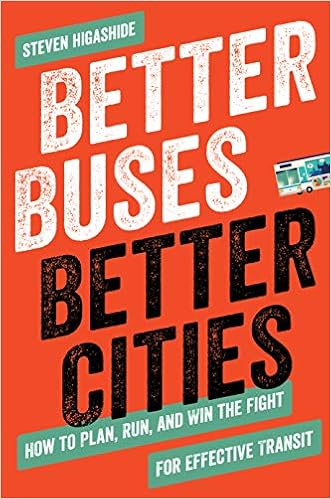
99% Invisible's podcast "Missing the Bus," has a brilliant explanation on why bus frequency is so important.  It is an interview with, Steve Higashide a transit expert, bus champion, and author of a new book called Better Buses Better Cities.

Take a look at WSTA's ride per hour of service ratio to see which routes are transporting the most people.  I believe there is a lot of latent demand on routes 92 and 96. Improved frequency on those routes would generate more rides and many corollary benefits for our community.

Come out to the public works committee meeting on Tuesday the 17th to weigh in on making our city better via improved bus frequency.

Wednesday, February 19, 2020

Making News


I pray that the newspaper article, "Scientist turned bus driver advocates for Winston-Salem passengers" helps improve public transportation locally.  I am grateful Scott Sexton wrote the story and I appreciate his skill as a writer.

On Monday, we went to City Hall to speak up for improved bus service.  You can see the video of our comments online.  If you want to skip to the comments, below are the list of time points:

  • Minute 54 - Phillip opens with a challenge to the council to consider how privatization keeps the system at an arm's length. 
  • Minute 60 - Luke shares a brilliant summary of the CSEM Rider Study
  • Minute 68 - Brian shares a passionate personal testimony and plea for the city to do better 
  • Minute 70 - Ray closes with a call to improve bus service as we aspire to be a city
  • Minute 77 - City Council Member Dan Besse thanks us for showing support and gives rebuttal. 
Please follow Council Member Besse's invitation to come to the Public Works Committee meeting on March 17 at 6pm to comment on proposed service changes.

Editors note on 3/4/20 Public Works committee was changed from 3/10 to 3/17.  

Wednesday, January 22, 2020

FaithHealth Recording

I presented to FaithHealth today and was grateful to tell stories from the bus. 

You can hear the recording and view the slides.

Tuesday, January 21, 2020

FaithHealth Slides


Tomorrow is the big day. 

I hope you can join me to hear stories from my year of driving a city bus. I learned a lot about the social determinants of health. 

Come to the 10th Floor of the Wake Forest Baptist Health Comphrenshive Cancer Center at 9am to hear the presentation for FaithHealth. 

I have the slides ready to go!   

Monday, November 11, 2019

Operator Survey


Alfredo and I conducted a survey of fixed-route bus drivers for their suggestions regarding routes and schedules.   Below are the tables of our findings. 


Table 1. WSTA Driver Schedule Survey N =79Total%
A ten-hour shift 4 days a week starting in the morning5772.2%
A ten-hour shift 4 days a week starting in the evening3038.0%
An early morning 8-hour straight shift 5 days a week2227.8%
A Late 8-hour straight shift 5 days a week1620.3%
Split shifts 5 days a week56.3%
Night runs with weekends off1822.8%
Provide a suggestion of a schedule810.1%


Table 2. Route Suggestions
RouteSuggestion
89More time on the route
93Route needs to be cut short
93Service Castle Heights or 331 and North Hampton Dr; Change time points on the outbound trip
95Cut out Strattford and Knollwood
99More time on the route
103Move final time point back so you can get to TC earlier
104Changing inbound time points for a bathroom break at the TC on Route 104. The new time points could be [5. Old Lexington 6:05] [6. Waughtown and Vargrave 6:10] [7. Waughtown and South Main 6:15 [1.TC 6:20].
104Adjust so you can get a bathroom break
105More time on the route
105Not go up Argonne

Sunday, November 3, 2019

NC BikeWalk Summit

I will be telling stories at the NC BikeWalk Summit on Saturday, November 9th in session 4 from 10-11am. I hope to inspire change.

As background on economic mobility, I plan to tell them that roughly 40% of Americans would struggle covering a $400 emergency expense like a broken down car (FRB).  Last week 3 different passengers asked route questions and sheepishly admitted they were new riders because of recent car trouble.  They represent the latent demand that I see in the ride per hour ratio.

I will explain why people run in an effort to catch the bus so they can "step up" in life even risking it at dangerous intersections.

I will advocate for counting every bus ride as a call for more safety infrastructure for pedestrians.


Saturday, November 2, 2019

Intersection

From the driver seat of the city bus, I have begun to dread coming to the intersection of Patterson and Indiana Avenues.  The intersection is the convergence of routes 87 and 92.  You can see from the ratio of rides per hour that they are our most popular routes.  These routes combined represent just over 15% of all rides. 

I am fearful for the people I see walking in this dangerous interchange.  I have seen them darting across this busy intersection to try to catch whichever bus is passing at the time. Route 87 stays on Patterson while 92 turns on Indiana.

If you go in person or take a virtual Google Maps tour of the intersection you will see pedestrians but no infrastructure for safely navigating the interchange.  The intersection is crowded with people and yet no pedestrian amenity (i.e. crosswalk, island, signal) in street design. 

Driving either of these routes is an inexhaustible source of people-watching. It is a privilege to serve the passengers in these important public transportation corridors.  I hope I never witness a person struck by a car at the intersection of Patterson and Indiana. 

Sunday, October 20, 2019

Route Ride Per Hour Ratio

The Winston-Salem Transit Authority is on course to provide over 2.5 million rides in 2019. That is a big number that can be hard to grasp.  Breaking it down by route helps it add up.

I became a bus driver to experience first hand the power of public transportation and to help me understand the complex system.  As I drive around I have been thinking of a measure to use in comparing routes.  I came to the idea of using a ratio that compares ridership per hour of service.

 Table 1: WSTA ridership per route for September 2019.
RouteDTNSDRides% RidesHrs% HrsRides/Hrs
87^NL721,54610.1633.54.434.0
92NEL611,9695.6428.03.028.0
96EL712,7986.0497.53.525.7
93EC79,7474.6475.03.320.5
91NL68,3673.9428.03.019.5
83*SL714,4976.8801.55.618.1
89NL78,6604.1481.53.418.0
86SL78,3583.9483.03.417.3
84WL66,3843.0412.02.915.5
105*SEL711,1475.2751.55.314.8
81/82WC66,1092.9416.02.914.7
103*WL710,7625.1733.55.114.7
94EL77,1563.4493.53.514.5
88NL53,5481.7260.01.813.6
102SWL51,3110.6100.00.713.1
107*WL79,1214.3713.55.012.8
106NL76,0652.8485.53.412.5
98NEL53,2451.5260.01.812.5
80*WL78,8154.1733.05.112.0
109NWL65,1052.4438.03.111.7
90NL75,7822.7497.53.511.6
85*WL67,8193.7678.04.811.5
104SL75,5012.6483.03.411.4
101SECT75,1292.4473.53.310.8
97NC63,9581.9422.03.09.4
95WL54,2892.0480.03.48.9
110EC59560.4120.00.88.0
108SC72,9711.4485.53.46.1
99WCT58350.4240.01.73.5
100AllC71,0800.5361.82.53.0
29213,03010014265.810014.9
D = Cardinal Direction | T = Type (Circular, Cross Town, Linear) | NSD = N Service Days
^ = has 2nd bus | * = 2nd Bus Funded by NCDOT B40

You can see that some of the routes are very popular and others are quiet.

I believe you can use this type of information to advocate for second buses on popular routes like 92 and 96.  For example I think the Place Matters Initiative should push for a second bus on route 96 that runs through their impact communities.  I have driven it and could feel the importance of the bus in those places.

What interesting things do you see in this information? 

This analysis is available on the web. The data was provided by the Winston-Salem Transit Authority in an email from the General Manager on 10/10/19.